Monday, March 8, 2010

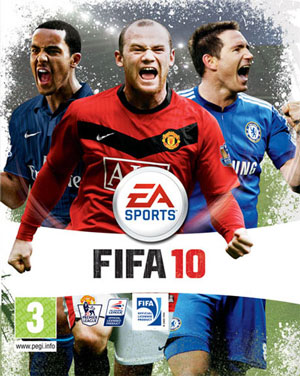
FIFA 10


System Requirements
Minimal system requirements:
• CPU: 2.4 GHz single-core
• RAM: 512 MiByte (XP) or 1 GiByte (Vista)
• Graphics card: Geforce 6600 or better, Ati Radeon 9800 Pro or better, Support for Shader Model 2.0 or better, DirectX 9.0c
• VRAM: 128 MiByte
• Sound: DirectX 9.0c compatible sound device
• Input: Keyboard or Dual Analog Gamepad
• HDD: 4.4 GB or more, free disc space
• Internet: Broadband Internet connection required for Installation and online gaming

Recommended system requirements
• CPU: 3.2 GHz single-core or 2.4 GHz dual-core
• RAM: 1 GiByte (XP) or 2 GiByte (Vista)
• Graphics card: Geforce 7800 or better, Ati Radeon X1800 or better, Support for Shader Model 2.0 or better, DirectX 9.0c
• VRAM: 256 MiByte
• Sound: DirectX 9.0c compatible sound device
• Input: Keyboard or Dual Analog Gamepad
• HDD: 4.4 GB or more, free disc space
• Internet: Broadband Internet connection required for Installation and online gaming

Review

Under the careful gaze of David Rutter, EA Canada transformed FIFA from mid-table mediocrity into genuine champions with last year's FIFA 09. No longer instantly considered inferior to PES, the idea of seeing where FIFA could continue to improve is something we would never imagine admitting to barely a few years ago. Created under the mantra of '30% innovation/70% evolution', FIFA 10 sets out to enhance its predecessor's impressive command over controls, player movement, and matchday experience, while serving up a handful of new gameplay features and modes.

Content
The bewildering amount of content that FIFA 10 offers can't be faulted. Being able to play as a specific player in 'Be-A-Pro' makes a welcome return from FIFA 09, as you attempt to rise through the ranks of the club's reserves and become an international star. Admittedly, it's all largely familiar, but there are a number of worthy additions expected from the annual update. The ability to create your own player down to the smallest, customary EA detail is made a little easier with the ability to upload a photo of your face and add it on to your player. But it's the fact that your virtual player can gain experience by playing in various offline modes (and the Arena) and earn accomplishments, which in turn enhance his playing stats and unlock goodies (untucking your shirt, long sleeves,...) that gives the concept a purpose it never previously had. Your virtual player can then also take it online and join the 10 vs. 10 Pro Club Championship, where players compete together in clubs from 11 regional leagues. The chance to become a Virtual Legend and top world scoring ranks, becoming a sought after transfer target in the process, makes this an alluring prospect once the servers become active.

Improvements

With 'more then 50 major improvements', the Manager Mode is where the bulk of the offline game stems from. Although we didn't spot each of these improvements, the more natural way in which players develop and the more lifelike grind of the transfer market gives the mode the touch of realism that it's always lacked while results appear to be much more genuine. Interactive Leagues, Exhibitions, and the customary selection of Tournaments round off the selection and should provide enough substance to keep even the most fanatical football fan happy until next season. If EA is to be believed, then over 350 million online matches of FIFA 09 has enabled the team to iron out the flaws and offer the definitive online experience in FIFA 10. Unfortunately, the servers were not active at the time of writing, but the addition of a multitude of new custom filters should at least bring an end to everybody playing as Man United.

On the Pitch

On the pitch, it's largely the same case of subtle evolutions over massive back-of-the box bullet point features. Once again, the grasp over player individualities, ball physics, and movement is enjoyable and the first touch control and right thumbstick skill moves are still endlessly gratifying. Excessive bouts of FIFA 09 would draw attention to its few foibles. The AI - although unquestionably good - tended to stick with the same routines, half-line goals (and other cheap techniques) were easy once you knew how, and control over long ball passes that didn't turn into floaters was erratic at best. FIFA 10 makes genuine improvements in all of these areas. In particular, the variety in teammate and opponents' movement and play is immediately noticeable, which makes for less predictable and more genuine matches. A greater level of control over the curve and pace of the long ball is certainly evident, although this opens up an issue that we believe could become a cheap glitch. We've scored directly from a corner on several occasions because of the added ability to put more curve on the ball; this isn't necessarily a bad thing, but watching the otherwise flawless keeper watch in disbelief every time concerns us that this could be a flaw to exploit when you're a goal down in a crucial online match. Generally, FIFA 09 achieved a considerable sense of fluidity and tight controls on the pitch, but it's fair to say FIFA 10 takes it to another level. The improved match dynamics and player movement emphasise the individual skills of each player more profoundly than before. The keeper AI has also been looked at closely, although the scrutiny appears to have come at the cost of last year's occasional superhuman reflexes to provide something a little closer to reality - although thankfully that doesn't mean Ben Foster like slip-ups.

Gameplay
Players attempting to wrestle control of the ball do so with much more variety and many more animations. However, it's not just an aesthetic change as it now feels more like a genuine scuffle which can be influenced. As a result of these changes, FIFA 10 gives the attacking player a greater chance of retaining the ball and making a purposeful run, which is further aided by the introduction of the Skilled Dribbling command. This is the big new gameplay feature for us, which allows you to bring the ball under close control by pressing both shoulder triggers together. It provides a link between controlling a pass before launching into a dribble; facing a defender, and using the skills to skip right past him or tease him into a rash challenge. The ability to dribble with 360 degrees of control seems groundbreaking at first, but is a little misleading. It doesn't provide the Cristiano Ronaldo-drowned-in-suncream-like fluidity that we were initially expecting, but it does bring a subtle layer of added control that increasingly becomes evident and important - particularly if you go back to FIFA 09.

Commentary

Unfortunately, despite the universal praise we have to knock FIFA 10 down for the complete lack of attention paid to the commentary. Once again, Martin Tyler and Andy Gray provide the punditry, but anybody who has played FIFA 09 will instantly spot the same lines being used again from last year's outing. It's not that it's particularly bad, but if football commentary wants to continue to improve beyond the two-part dialogue between the pair - which it certainly can - then you feel Rutter has to be willing to take a few more risks and show a little more innovation than evolution. Otherwise FIFA 10 is exemplary in the sound and overall presentation. Players call 'man on' and 'down the line'; announcers are heard over the Tannoy and crowds get behind the team with authentic chants. Visuals are once again beyond any competition, with stunningly detailed player models, sublime animation and a nice added depth-blur on close-up scenes.

My recommendation

Go Get it What ya waitin' for?

Grand Theft Auto : IV


System Requirements
Minimum System Requirements

OS: Windows Vista - Service Pack 1 / XP - Service Pack 3
Processor: Intel Core 2 Duo 1.8Ghz, AMD Athlon X2 64 2.4Ghz
Memory: 1.5GB, 16GB Free Hard Drive Space
Video Card: 256MB NVIDIA 7900 / 256MB ATI X1900


Recommended System Requirements

OS: Windows Vista - Service Pack 1 / XP - Service Pack 3
Processor: Intel Core 2 Quad 2.4Ghz, AMD Phenom X3 2.1Ghz
Memory: 2 GB (Windows XP) 2.5 GB (Windows Vista)
18 GB Free Hard Drive Space
Video Card: 512MB NVIDIA 8600 / 512MB ATI 3870

Review
rand Theft Auto was a big seller on the consoles earlier this year and deservedly so ... It told the story of immigrant Niko Bellic's adventures through the crime infested Liberty City. The PC version is upon us now and there are some new additions, including support for 32 multiplayer matches and an editor for making and recording clips from your in game sessions.

Rockstar have been making a lot of money from the Grand Theft Auto franchise over the years and from GTA3 onwards the style changed from a top down action game to full immersive 3d ... creating a new genre in the process and setting the foundation for a plethora of clones, such as Saint's Row.

When Niko first lands in Liberty City he meets up with his cousin Roman, a small time crook with a tendency for hefty embellishment and exaggeration. The game breaks from the Vice City and San Andreas rulebook by presenting Niko as a somewhat deeper character, not obsessed with ruling everything, but more interested in finding his own emotional peace of mind. Don't fret, violence is still the order of the day but this time around you don't feel like you are controlling a two dimensional cartoon character like Duke Nukem. He is the first character in the franchise to actually have a moral code, even if at times he is kicking the hell out of someone to achieve it.

Thankfully the mechanics have changed with IV in that if you fail a mission or die you get the immediate option to retry without losing your weapons cache. You can travel to waypoints faster by calling a taxi or you can assault or kill someone and steal their car.

Many of the missions break into an initial travel phase followed by a heightened state of alert then the conflict and an escape. If you didn't read our console review of the game earlier this year then you will be pleased to hear that Rockstar implemented a new cover system which made the game more approachable. This time around of course many of the controls are handled by a mouse and keyboard combination. When Niko is behind cover it is possible to blind fire or pop out quickly to let go of a few well timed body shots. Additionally it is possible to move between cover sections by quick button presses .... not quite to the same smooth flowing style of Gears Of Wars mind you. Rockstar have also offered support for a gamepad which makes the control of vehicles more intuitive on the PC version, although quickly changing between mouse/keyboard and gamepad (depending on your current task) is rather awkward.

Just like before, the storyline and character development is first class with the detailed character and world environments adding massively to the experience and now, thanks to the PC platform you are able to save key moments with the replay feature. Pressing F2 will save 30 seconds of game time to your hard drive and make it accessible by the new, built in replay editor. These tools allow you to drop in filters, add text and music and splice sections together as well as adjusting the camera angles. This is a wonderful addition and should lead to a massive plethora of weird and wacky Youtube clips over the Christmas period.

Editor mode is accessed very smoothly via Niko's in game cell phone which acts as a virtual hub for a wide range of options and activities. In fact, the cell phone is a really clever device: NPC players can call Niko when they need or want something and he can arrange his dates with women over it also. The phone also opens up a wide array of things you can attend with colleagues, such as playing pool, going to comedy clubs or heading to restaurants or bars for a night out. All with the purpose of increasing the feeling of social interaction in this virtual world, granted they do become rather tedious at times, but overall it is a welcome feature.

City
Liberty City is a stunning virtual city based on New York and has plenty of unruly characters, shoddy buildings and realistic environmental touches you would expect in the real world. There are even nightclubs, internet cafes and a wealth of shops that increase your experience in charge of Niko.

Radio
he vehicle radio system is still in place and when you combine it with the internet and cell phone activities it would be fair to say that when it was released it was pretty much a class leading combination. I don't think any game released to date still has managed to create such an immersive and interactive environment. This time on the PC platform we are allowed access to Independence FM which lets the end user load music files to a game directory that play when you select the station in-game.

Online
Online play is very well catered for with the PC version with larger 32 person support. You access this via Niko's phone and there are options to race or play deathmatches as well as a number of team based games with specific rules. The 32 player support is very impressive in free mode across the whole area and structured content is also available for gamers who want a more organised online experience. Unfortunately there are no extra cooperative modes when compared with the console versions but multiplayer is still a big part of this game and it is improved upon with the latest PC release. A strong selling point on its own merits

Video
Graphically, the game is improved upon the console versions although by today's standards it certainly isn't cutting edge. The character models are decent but it is the environment and draw distance which deserves the most acclaim. Rockstar really have produced one of the most gritty, authentic environments ever seen in a game to date. I tested the game on several computers and with a Quad core 2.4ghz, 2GB ram, Vista 64bit and Nvidia 8800GTX it struggled to maintain perfect frame rates at high resolution. Moving to a Quad Core at 3ghz with 4GB of ram and a 260 GTX improved the experience dramatically as I was able to max everything at 1920x1200 without a hitch. It is safe to say that if you want to play GTA IV at high resolution with everything maxed you are going to need a high end modern gaming PC.

Audio
The audio is just as impressive as before with top grade voice acting from the cast as well as a huge variety of ambient sound effects and chatter. The game oozes personality and attention to detail and it is only after many hours of game play do you start to notice slight repetition.

My Recommendation
If you never played Grand Theft Auto 4 on the 360 or PS3 then you are in for a treat because the PC version is stunning, with one caveat ... you will need a powerful gaming PC to get the most from it. With all the new additions such as improved graphics, enhanced online play and more in game options the chance to enjoy yourself while murdering people in Liberty City have been stepped up a notch. If you already have the console version however you may want to skip this and put your money elsewhere.

Need 4 Speed Shift


System Requirements
3.2GHz Intel Pentium 4 Processor, 1GB RAM and a PCI-Express, pixel shader 3.0 compatible graphic card with 256MB.

Review
As I will say, This is the best need fre speed game ever and I will put it on 1st of all the racing games because it includes huge amounts of racing tracks and much more

The Need For Speed brand has become synonymous with illegal street racing over the years, but it's worth remembering that the series originally broke ground as a much purer racing experience. Arcade elements have always been part and parcel of the NFS games - even the original had police chases and traffic on its tracks - but the first games were much more about unfettered supercars competing in closed circuit races than they were customised Subaru Imprezas cruising the roads of open world cities.

And so the series returns to its spawning grounds, although this time with its focus exclusively on the legal world of motor racing. Licensed circuits are plastered throughout this title, from Silverstone and Spa Francorchamps to Laguna Seca and Brands Hatch, while the cars are blended between a wish list of factory-line production cars (a la Gran Turismo) and stripped down, racing spec variants of these original models. Make no mistake, Need For Speed has gone legit, although not without retaining the staples of car modification and drift racing that gamers now expect from an NFS title.

Candid Camera
Much like Codemasters' Race Driver: GRID, Need For Speed Shift is a much more enjoyable experience when played from the cockpit view rather than the above-and-behind camera angle that most racers lend themselves to. In fact, viewed outside of the cockpit, Shift becomes a much blander racing experience - not bad but decidedly run-of-the-mill. This isn't necessarily a criticism though, as the gameplay when viewed from inside the car is nothing short of a landmark in the production of racing games, where Slightly Mad Studios' inspired camera work has built the most adrenaline-fuelled racing sim we've ever played.

There are a number of nifty camera tricks that SMS uses to do this, such as employing motion blur at high speeds; shaking the camera up in accidents before disorienting the driver with a blurry, greyscale filter; lurching the camera angle forward under heavy breaking, and veering it to the right/left in the corners. The result is a thoroughly convincing depiction of G-forces and high impact crashes that the racing game genre has rarely seen before. It is by far and away the most impressive element of the game, without which the other standout features would fail to shine.

Of course, this all makes a lot of sense given SMS' heritage. Its involvement with the critically acclaimed GTR series of PC games and the experience drawn form this is evident throughout Shift, although EA's production values mean that it's not quite the fully authentic sim that GTR2 was - 24 hour endurance races are hardly a game selling feature here. At the same time, SMS has not forgotten its roots. Endurance race events do feature in Shift, it's just that they're denoted by 10 laps of Spa for example, while regular races are usually between 1 and 3 laps long.

Equally, the sense of progression throughout Shift is clearly where EA's associate producers have had a strong influence. Soon after starting a new career, gamers will come across the Driver Profile, which charts your performance on the track by dishing out points for either 'Aggression' or 'Precision' driving. The former includes trading paint with another driver or slip-streaming them down a straight for example, while the latter awards points for mastering the driving line through a turn or performing a clean overtaking manoeuvre. These points are then dished out via a combo meter during races, which then builds up your profile as a precise or aggressive driver accordingly and increases your Driver Level, while rewarding you with 'Badges' for certain achievements.

It's a lot like the sort of production sheen that was once added to a certain racing series by developer Criterion. EA's involvement with Burnout 3: Takedown was essentially what lifted an aspiring series of games into arguably the best arcade racer on previous-gen consoles and, as much as racing purists might scoff at how Shift's racing sim elements have been watered down in some areas, EA clearly knows what it's doing here. While the mesh between EA production and SMS development might not be quite as flush as it was with Criterion and Takedown, there's no denying the fact that this EA sheen does make Shift more accessible to a broader market of gamers, which is no bad thing (after all, this is a Need For Speed game).

Car customisation has been integrated into Shift in ways that aim to please both sim and arcade fans. Custom paint jobs can be applied to the cars you purchase, while a wide range of rims and body-kits for each model can spruce up their appearance and this will no doubt appeal to the typical Need For Speeder. Simulation fans will then enjoy the incredibly deep car setup options (which include downforce, gear ratios, tyre pressure, differential, and steering camber to name but a few), while racing liveries are available to doll factory-line cars up like GT racers, and everything from drivetrain to cockpit upgrades can be made to increase performance. The all important nitrous injections haven't been forgotten either, although admittedly their effects are a lot more subtle than in previous NFS games.

EA's influences extend beyond these more cosmetic areas and into the gameplay as well, with a range of race types that retain shades of previous NFS games and the Burnout series. Shift's events extend far beyond standard, closed circuit races with timed events such as the 'Hot Lap' and 'Time Attack' competitions, as well as two different types of eliminator events, Driver Duel's that set two cars against each other in single-lap gladiatorial battles, and the previously mentioned endurance races.

Without a doubt though, the most refreshing change of pace comes from the drift competitions, which are played out in sanctioned events across world motor racing venues. Cars modified for high revs are used and must then be guided across a series of turns. Hitting the markers and extending the drift for as long as possible is the critical skill required to ratchet up the points, so the events are not too dissimilar to their illegitimate cousins from the NFS: Underground games and their offshoots.

These events continue up through four tiers, with each tier introducing a new range of more powerful cars and a considerably steeper learning curve with this added performance. Vehicles range from common road going vehicles in tier 1 (e.g. the Ford Focus and BMW 135i), to the most powerful supercars in the world at tier 4 (e.g. the Bugatti Veyron, Mercedez-Benz SLR McLaren, and Pagani Zonda), while the likes of Ford Shelby GT500s and Lamborghini Murcielagos in-between are more than enough to keep things interesting. but suffice to say there are more than enough to keep the game fresh and exciting all the way up to its conclusion in the Need For Speed World Tour invitational event.

It's this sense of progression and achievement in the game, coupled with a challengingly steep learning curve, which ensures that its level of appeal doesn't drop at any stage. Equally, the content held within Shift's four tiers and the NFS World Tour will keep gamers beavering away for hours. If you simply want to progress through the tiers to the World Tour as quickly as possible, then it'll take you a good 15 hours. On the other hand, if you want to win every event that's available on your way to the tour, then you can add another 10 hours on top of that. Playing the game until you've achieved every star that's available on all of the events (achieved by completing additional tasks such as mastering all corners), then you could be playing for around 35-40 hours, possibly more.

What's The Damage?
Beyond the impressive camera work mentioned at the top of this article, Shift's visual prowess varies depending on the platform. The PC version is superior to consoles by quite a margin with better motion blur effects, more detailed car models, improved lighting across the environments, and better heat hazing effects. The added details are particularly noticeable in Shift's stunningly detailed cockpits, which are probably the most accurate and well designed interiors ever seen in a racing game.

The console versions then obviously run at a lower resolution, while the textures aren't quite as smooth as they are on PC. Damage modelling is another area where the PC comes off better than consoles with more detailed panel crumpling and damage effects. Additionally, the modelling on consoles uses muddier textures and appears to be less dependent on the scale of a collision. However, SMS has previously indicated that Shift's development has been led on the PC platform, so we're inclined to take the PC version's graphics into account when considering scores.

Exactly how well this damage system is used by SMS is another question though. Gamers are offered two damage options in the difficulty menu: 'Visual Only' and 'Full'. However, when set to 'Full', the worst thing that'll ever happen to your car is that it will veer off to the left or right a bit. You can't total a car, regardless of how heavy an impact is, which seems a bit cheap for a developer that prides itself on realism. Similarly, the physics behind crashes are a bit questionable as your car has a bizarre tendency to scoop up opponents like a pie slice whenever you rear-end them, even at relatively low speeds. It's this that often leads to the more spectacular crashes in the game, such as cars going airborne or rolling across the tarmac multiple times, although it doesn't always look that convincing when it happens to be honest.

However, it's hard to think of many more criticisms than these and there are many more good things to say about it that we haven't had the time to go into great depth about here. The AI is superbly dealt with and produces opponents that are not only very aggressive, but will also make believable mistakes when you're not interfering with their race. We often saw opponents getting into tangles ahead of us, which adds another layer of realism to the races beyond what most other racing games can muster.

The online multiplayer is also well accounted for, with ranked and unranked races for up to 8 players as well as the ability to organise Driver Duel Championships (similar to the single-player event listed above) and check out your friends' fastest lap times and scores from the single-player career. The sound won't disappoint either, with engine noises that would make Jeremy Clarkson gurn, although it has to be said that the soundtrack is a touch generic. There's also the occasional voice-over from a member of your pit crew, who often does his best Murray Walker impression with a "Go, go, go!" at the start of a race before comically reminding you to "Have fun".

Recommendation

I will surely recommend this game to every racing-lovers gamers.

Call of Duty Modern Warfare 2

System Requirements
Microsoft Windows XP, Windows Vista and Windows 7 (Windows 95/98/ME/2000 are unsupported)
Processor: Intel Pentium 4 3.2 GHz or AMD Athlon 64 3200+ processor or better supported
Memory: 1 GB RAM
Graphics: 256 MB NVIDIA GeForce 6600GT or better or ATI Radeon 1600XT or better
DirectX: Microsoft DirectX(R) 9.0c
Hard Drive: 12GB of free hard drive space
Sound: 100% DirectX 9.0c compatible sound card
Internet: Broadband connection required for Multiplayer Connectivity. Internet Connection required for activation

Review

I bought this game some days ago and I was forced to write a review about it so I made this blog to write reviews about some latest games

First of All I want to say that this is the top selling game of the year and I will recommend to my readers

Over the years the Call of Duty series has set the bar for immersive, action-packed, cinematic FPS gaming, and no matter what camp you're from there's no denying the franchise's influence on the industry. When Infinity Ward moved from the classic World War II setting and blazed new ground with Modern Warfare we saw the first obvious split within the world of Call of Duty. The series dropped its historic focus, created a new cast of characters, and began treading on new ground by taking the first-person shooter genre to new locales, and pushing the boundaries of what military games are willing to show. With Modern Warfare 2, the sheer amount of hype has been practically inescapable, with preorders alone setting it up as one of the biggest selling games of all time, the addition of even more multiplayer modes and features, and the game's new Special Operations mode has set Infinity Ward's lastest up as the game to beat this year.

The real question: has it been worth the wait, and can Modern Warfare 2 live up to the precedent set by over half a decade of Call of Duty tradition?

Modern Warfare 2 is by far the least traditional of the series, with the core package broken up into three main pillars of gameplay. Single-player fans have their main campaign, if you're down for more co-op gameplay either locally or via online connection you've got the new Spec Ops mode, and Modern Warfare's groundbreaking multiplayer is back, and truly better than ever. There's an overwhelming amount of content to experience, but with each mode being 100% standalone in nature, you're getting three completely different experiences all in one. That, however, also plays a huge factor into how your final opinion of Modern Warfare 2 as a whole turns out.

First and foremost is the single-player experience. As the anchor of the Call of Duty world, campaign mode is back, and it's intense. You'll instantly get a sense of just how far the improved engine has come when you're thrown into the bustling streets of Rio de Janeiro's favela, the ice-capped mountains of Russia, the dusty roads of Afghanistan, and other unexpected locales. On the visual side of things, Modern Warfare 2 is an obvious step up over Call of Duty 4 and World at War, with a stronger emphasis on complex terrain in the environments, weather effects, destructible objects, and the overall sense of action and chaos that comes with so many visual improvements. This is only complemented further by the increased attention to sound design, with the effects of many returning weapons being re-recorded,even more in-level chatter amongst your allies, and a truly captivating score by Hans Zimmer which builds based on specific in-game moments. Modern Warfare 2 feels like an action movie through and through, with the production values alone dating Infinity Ward's last game, Call of Duty 4, quite a bit.

At the same time, the single-player campaign has its issues. For starters, it's short. I've been playing Call of Duty 4 steadily since its release, and my first completion of the Modern Warfare 2 campaign came in at just under five hours on regular difficulty. Playing through on hardened will add another hour and a half onto that. Modern Warfare 2 is definitely more chaotic this time around – partially due to the new visual effects and upped production values – and with the improved enemy AI and tough scenario design you'll be fighting for every checkpoint. One of the larger visual changes to the game's heads-up display this time around is the blood splatter system. In previous Call of Duty offerings you'd get damaged, the screen would start to shade red, and you'd be required to seek cover before your vision returned to normal. Modern Warfare 2 employs a new system, actually having a thicker blood layer added to up the realism. There's been some discussion on whether the splatter is too distracting, and in my experience with the game it's far from an issue. You'll be able to take more hits on easier difficulty settings, so while a few well-placed shots will drop players on hardened or veteran modes the added splatter is an acceptable trade-off for more overall health

Thankfully many of the glaring issues from last time around have been fixed. You won't find unlimited enemy spawns in areas, there's always a waypoint icon on-screen showing you where to go or who to follow, and the amount of in-game chatter from your team is simply astounding. It isn't often in games that you'll hear your squad call out specific areas on the map and have it mean anything. When your friend shouts, "Two tangos behind the yellow station wagon!" you'll actually see two enemies behind a yellow station wagon. It's a pretty engaging experience. You'll still have random issues with friendly AI, specifically with blocking your movement or deciding to walk in front of you mid-firefight, but for the most part it's a better experience than the first Modern Warfare.

Where Modern Warfare 2's campaign drops the ball, however, is in its actual storytelling. With no historic anchor it's up to the Infinity Ward to not only put players in the moment, but also build and develop the world around those moments. That's one area where Modern Warfare 2 could have used more polish time or specific direction to get right. Events fly by, story is told only through load screens or in-game via NPC chatter (usually amidst firefights, where reading text isn't exactly priority one) and the story is so gigantically over-the-top that you'll often find yourself catching your breath after a mission, feeling like you had fun, and then trying to figure out what you just did in the context of the story. Though this may prove an issue for some, I was able to catch the plot, enjoy the characters, follow the twists, and truly care about the story. But then again, I've also been dedicated to nothing but Modern Warfare 2 for the last six months. The game often expects you to already know the characters, extrapolate on one line of dialogue or a quick cut-scene, and then figure out the story from there. In the end though, there's no real weight to anything you're doing. Outside of playing a couple missions as a soldier taking orders from the top you never get a true feel for scale, or any actual emotional attachment to the events. Something as simple as a newscast reel, or moment of downtime while on the field would have gone a long way. The end result is a game that has the feel of an '80s action movie with huge plot holes covered by plenty of epic moments, but never a believable, cohesive set of events. There are definitely still great moments to be had in single player though. There's a laundry list of awesome gameplay concepts and new tech at your disposal. It just doesn't stack up against some of the previous Call of Duty story modes, where single player was the obvious focus throughout the entire package.

For the vast majority of the experience, Modern Warfare 2 is best enjoyed with friends or random opponents online. The core campaign may have taken a bit of a hit, but in its place is an incredibly well done debut mode called Spec Ops. For those that don't know, Special Operations mode is an arcade-inspired challenge mode that can be played single player for the most part (minus a few co-op specific challenges), but is obviously designed around two-person team play. The mode is broken up into five tiers, each with missions that have a possible three stars to gain based on difficulty level in each of the 23 missions. You'll see a lot of repeating areas, some pulled directly from the single-player campaign, but the actual objectives (and most of the time, the exact layout of the level) is all new. You won't find leaderboards for this mode, unfortunately.

SpecOps mode is going to surprise a lot of gamers. It's addictive and surprisingly entertaining. It's longer, overall, than single-player mode, is a huge upgrade from the previously unlockable Arcade Mode in the first Modern Warfare, and some of the missions will have players going back over and over again well after all 69 stars are earned. The co-op only AC-130 mission, for example, is one of the biggest highlights of the entire Modern Warfare 2 package. One player mans the gunship while the other sneaks behind enemy lines on foot. The need for co-op play here is tremendous. In a similar mission, one player will man a chopper mini-gun and actually control the bird's fly speed as it circles a stranded soldier (player two) in a suburban warzone. Not only will you need to work in tandem to move from point to point, but the mission ends with an amazingly cinematic finale as the chopper pilot destroys countless buildings, lays down waves of covering fire for his friend, and then actually swoops in to pick him up on a rooftop. You may have thought you were buying Modern Warfare 2 simply for the competitive multiplayer or single-player campaign alone, but mark my words; you will be pulled in by Spec Ops, and when it's all said and done you'll be begging for more.

And then there's the competitive multiplayer. While there's a near-endless amount that could be said about the final and largest pillar of the Modern Warfare 2 experience, it really boils down to a few key aspects. First off, the visual overhaul. Multiplayer looks beautiful this time around, with the visuals trumping that of the single-player offering in the original Modern Warfare, and much more epic locales. There's a huge level of smoke and effects to be seen, electrical equipment and cars explode, and nearly every item in the levels are physics enabled, all amounting to an experience that feels like a true extension of single player, rather than some stripped down visual offering. There was a full team dedicated to multiplayer for Modern Warfare 2 and it shows.

As one of the most critically acclaimed shooters of all time, Call of Duty 4: Modern Warfare is a prime example of a tough act to follow. Yet, amidst a raging storm of anticipation and expectation, Call of Duty: Modern Warfare 2 has done it. The new campaign is chock-full of intense action and dramatic moments, and though it is more muddled than its predecessor (in more ways than one), it's still an absolute blast. The new Special Ops mode allows you to experience some campaign-inspired thrills with a friend and it's an engaging challenge to coordinate your maneuvers and tackle the varied objectives. Last but not least, the competitive multiplayer that took the online shooter community by storm two years ago is back. Though the addictive action remains the same at its core, there are a host of new elements that make matches more accessible, more strategic, and more rewarding. Unfortunately, these improvements are marred by limited online flexibility that may leave the PC shooter community out in the cold.

If you compare Modern Warfare 2 on the PC to its console counterparts, the game is every bit as awesome and enjoyable. Yet when compared to other online shooters on the PC, the multiplayer component is decidedly limited. Players cannot set up dedicated servers to host their own custom-tuned matches, and the player count for each match has been capped at 18 as opposed to the possible 64-player matches of Call of Duty 4: Modern Warfare. Furthermore, there is no support for user-created content, so rather than enjoying free mods and community maps, PC users will have to pay for downloadable content. And the money issues don't stop there: Modern Warfare 2 costs $10 more than most full-price PC games. Paying more and getting less is abhorrent to consumers, and this deterrent, along with the online restrictions, make Modern Warfare 2 much less appealing from a multiplayer perspective. Yet despite this disappointment, there is still a lot to love about the online multiplayer, and the other elements of the game remain unblemished.

The campaign picks up where its predecessor left off, and there's a new violent ultranationalist terrorist on the scene. Once again, you play as a few different soldiers who are part of the effort to make the world a safer place. Your missions take you around the world to a number of exotic locations and engage you in a variety of different conflicts, ranging from stealthy and silenced to crowded and cacophonous. The action is smooth and exhilarating, thanks to sharp shooting and movement mechanics that allow you to be as quick and deadly as your skills permit. Environments are well designed and detailed, though many textures don't look particularly good upon close inspection. Modern Warfare 2 isn't a beautiful game, but it looks great in action. The diverse levels not only provide varied sights, but they are also cleverly designed to allow the action to flow at an exciting pace. Opportunities for cover and flanking present themselves naturally, allowing you to move through the battlefield in a variety of fluid ways. The aggressive enemy AI will keep you on your toes, and achieving your hard-earned success is satisfying.

Modern Warfare 2's campaign, like that of its predecessor, is quite short, and you'll likely finish it in about five hours. Though it is disappointing that there isn't more of it, what you do get is a relentless barrage of tight combat and thrilling set pieces. In one early level, you man the turret of a Humvee patrolling the claustrophobic streets of a Middle Eastern city. Enemies seem to be around every corner, but you are ordered not to fire until fired upon. The tension builds, and once you are engaged by the enemy, all hell breaks loose. After a hectic (and unsuccessful) flight from danger, you end up fighting door-to-door in the streets and ruined buildings. This frantic combat ratchets up when you head to the slums of Rio de Janeiro and reaches a whole new level when you find yourself engaged in similarly intense firefights on the grassy lawns and paved driveways of suburban America. The fight on the home front has some very cool moments, but it doesn't mean you're done adventuring abroad. A dramatic prison rescue, a marine infiltration, and a snowmobile chase are just some of the other exhilarating moments that make this campaign so enjoyable.

Though completing the campaign is an intensely satisfying and exciting endeavor, you may not feel very triumphant when all is said and done. Modern Warfare 2 features some dark plot turns, and your missions sometimes have drastic unintended consequences. In one mission in particular, you infiltrate a terrorist cell and are called upon to do the kind of things that terrorists do. What follows is a neutered attempt at portraying the grim reality of terrorism, and concessions are put in place to keep the plot from getting too dark. Despite these limits, the scene in question is undeniably disturbing and undermines your sense of remaining on high moral ground. The game gives you the option to skip this particular level entirely, but the shocking consequences of this grim mission ripple throughout the game, making it difficult to feel like a hero. Subsequent developments further muddle your overall objective, and it doesn't help that many of the subtleties and connecting threads are mumbled during voice-overs between missions. The plot ends up being a bit disorienting, and you may get the feeling that, rather than being the tip of the spear, you are just along for the ride.

If you're looking for some campaign-style action that is unburdened by any sort of plot, then Special Ops is the place to go. The timed missions are campaign excerpts from Modern Warfare 2 and Call of Duty 4: Modern Warfare that you can play solo or online with a friend. The missions cover a variety of objectives, which include surviving waves of enemies, moving from point A to point B stealthily (or not), eliminating a certain number of enemies, and racing snowmobiles. You earn a rating based on your completion time or difficulty level and unlock new missions as you progress. Though the missions will adjust to allow you to play solo, Special Ops missions are made to be played cooperatively. Two guns are better than one when clearing out a crowded slum full of enemy combatants, and coordinating a simultaneous sniper attack is much more fun when you are counting down with a buddy. There are also a few missions in which one player uses an airborne vehicle-mounted gun to clear the path for the other player on the ground, and these are frantic and explosively awesome. There is no matchmaking, however, so if you don't have any friends online and need a teammate, you'll have to go fishing in the multiplayer lobbies. As is the nature of cooperative play, missions can fall flat if teammates don't communicate or go off on their own. It can be tough to find a communicative teammate who is willing to let one player take point, but it is certainly worth the effort. When you have a strong team assembled, cooperative play is uniquely fun, and Special Ops provides a great variety of engaging missions.

Of course, you could completely ignore both the campaign and cooperative modes and be very happy with Modern Warfare 2, despite the aforementioned online limitations. The insanely addictive, intensely exciting multiplayer formula pioneered by Call of Duty 4: Modern Warfare is in full effect here. The action is even faster and deadlier than the campaign, and killing enemies, accomplishing objectives, and completing challenges earn you experience points. These points increase your level and unlock new guns, new equipment, and new skill-boosting perks. You can design different classes to highlight different skills and then switch between them to adjust for the ebb and flow of battle. The core action remains largely the same, so folks who didn't enjoy it the first time around aren't likely to have a change of heart. And players who thrive on the diversity of dedicated servers and the creativity of mods and community maps will feel a keen sting of disappointment. Yet despite these omissions, Modern Warfare 2's multiplayer action is so expertly balanced and riotously fun that it's hard not to have a great time with it. And a number of new tweaks and additions make the action more engaging than its predecessor.

First off, weapon loadouts have been restructured. Guns you may have previously equipped as primary are now only available as secondary, so you can equip both an assault rifle and a shotgun if you so desire. This restructuring creates an intriguing array of gun combinations, and one of the new options isn't even a gun. The bullet-resistant riot shield can be equipped in your primary slot and used to assault heavily contested positions. Having multiple-shielded teammates can change the battlefield significantly, and new equipment items deepen the strategic possibilities. The blast shield can protect you against grenade-happy opponents, while the tactical insertion flare (allows you to designate your next spawn point) can be a powerful asset in objective-based modes like Demolition and Domination.

The perk system has also received an overhaul. Perks can now be upgraded through use and will eventually grant a secondary ability. These bonus abilities are often just as potent as the primary perk, though they aren't a linear extension of the primary ability. Upgrading the perk that grants increased melee distance, for example, will cause you to take no fall damage (allowing you to perfect your drop-and-stab maneuver). The new death streak perks may seem familiar to those acquainted with the infamous martyrdom perk from COD4, but they also provide some welcome (and cleverly implemented) aid for new players. These perks kick in after you die a few times in a row without getting a kill. Painkiller grants you increased health for a short time upon respawning and makes it easier to resist getting spawn killed. Copycat allows you to mimic the class of the last person that killed you, potentially granting you the guns, equipment, and perks of a much higher ranked opponent. Nothing mitigates the frustration of getting killed by a weapon you can't access like getting your hands on that weapon and doing some killing of your own.

Customizable kill streak rewards are the other significant addition. In COD4, kill streaks of a certain length would earn you rewards like air strikes and attack helicopters. In Modern Warfare 2, there are a host of new rewards that you can unlock and then equip as you see fit. The rewards themselves range from tactical aids like unmanned aerial vehicles that reveal enemies on the radar (or counter UAVs that block the enemy's radar) to powerful assaults like gunships, air strikes, and the exceedingly fun laptop-guided predator missile. Each kill streak requires a certain amount of kills to activate, and you can only equip three at a time, so there's a risk/reward mechanic at play. The chopper gunner reward is superpowerful, but if you aren't confident you can score the required 11 kill streak, you'll essentially be wasting a reward slot. Even if you can't string together 11 kills, you can still use some of the more powerful rewards courtesy of care packages. This reward drops a crate onto the battlefield that either contains an ammo resupply or a kill streak reward, such as a precision air strike. Not only do these rewards add an engaging strategic dimension, but they also do so in a way that allows all players to enjoy them.

The result of all these multiplayer tweaks is a richer, more strategically nuanced experience and a busier battlefield. Fortunately, the action generally remains on the good side of hectic, and the stream of rewards is as satisfying as ever. Two new elements, title and emblem, are little graphics and titles that you earn through your match performance, ranging from serious to totally goofy. While not exactly in keeping with the serious tone of the campaign, they add an amusing way to further customize your online presence. Though it features a robust variety of playlists in which to ply your deadly trade, Modern Warfare 2's competitive multiplayer is still limited compared to modern standards and will likely disappoint many hardcore shooter fans. The high price point sharpens the sting of these restrictions, but the core multiplayer action is still very addictive and very rewarding. The inelegant campaign plot may make you feel like you're just along for the ride, but it is such an intense, roaringly great ride that you will be glad just to have played it. And the cooperative missions provide a uniquely fun angle on the action that rounds out the package superbly, making Modern Warfare 2 thoroughly entertaining and thoroughly rewarding.

My Recommendation
Although the game is expensive but truly saying, I will recommend it to all the gamers
So get it. I loved this game and Infinity ward has made a great warfare.